
Biology
Stop colouring biological diagrams. Draw the mechanism from memory.
Why redrawing and colouring finished diagrams is weak revision for A-Level Biology, and how to sketch mechanisms such as osmosis from memory, explain them, check them against the AQA specification and test them on unfamiliar examples.
By Finesse Tuition · · 6 min read
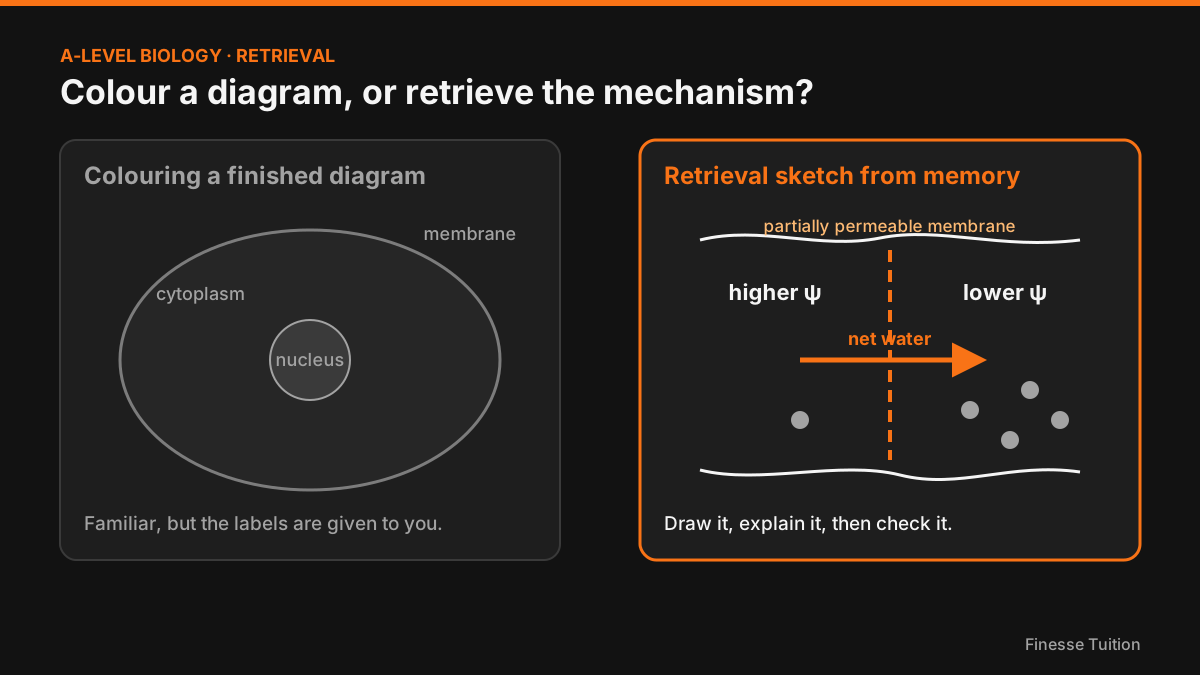
A beautiful diagram can hide an empty explanation
Neat, colourful diagrams feel like progress. You finish with a page that looks like a textbook. But A-Level Biology questions rarely ask you to reproduce a labelled picture. They ask you to explain what happens, why it happens, and what would change if conditions changed. You can colour an excellent diagram of a membrane without being able to say which way water moves, or why.
The alternative is simple and harder: close the book, draw the mechanism from memory, explain it in words, then check it against a correct source. The gap between your sketch and the correct version is exactly what you need to learn. This guide works through that process using osmosis, which appears in the AQA A-Level Biology (7402) specification within the topic on cells and the transport of substances across membranes.
Why retrieval beats reproduction
When you copy or colour a diagram, the information is in front of you, so your memory does very little work. When you draw from memory, you have to retrieve each part, and the effort of retrieval strengthens what you can recall later. Karpicke and Roediger (2008) found that repeated retrieval practice produced much better long-term recall than repeated study; their participants were learning foreign-language vocabulary, so the finding supports the principle rather than demonstrating a direct effect on biology grades.
Dunlosky and colleagues (2013) rated practice testing and distributed practice as high-utility techniques in their review of study methods. They rated highlighting and rereading as low utility when used on their own. Colouring a finished diagram is closer to the second group. That does not make diagrams worthless; it means a diagram is most useful when you produce it as a test, not as decoration.
The mechanism: what osmosis actually is
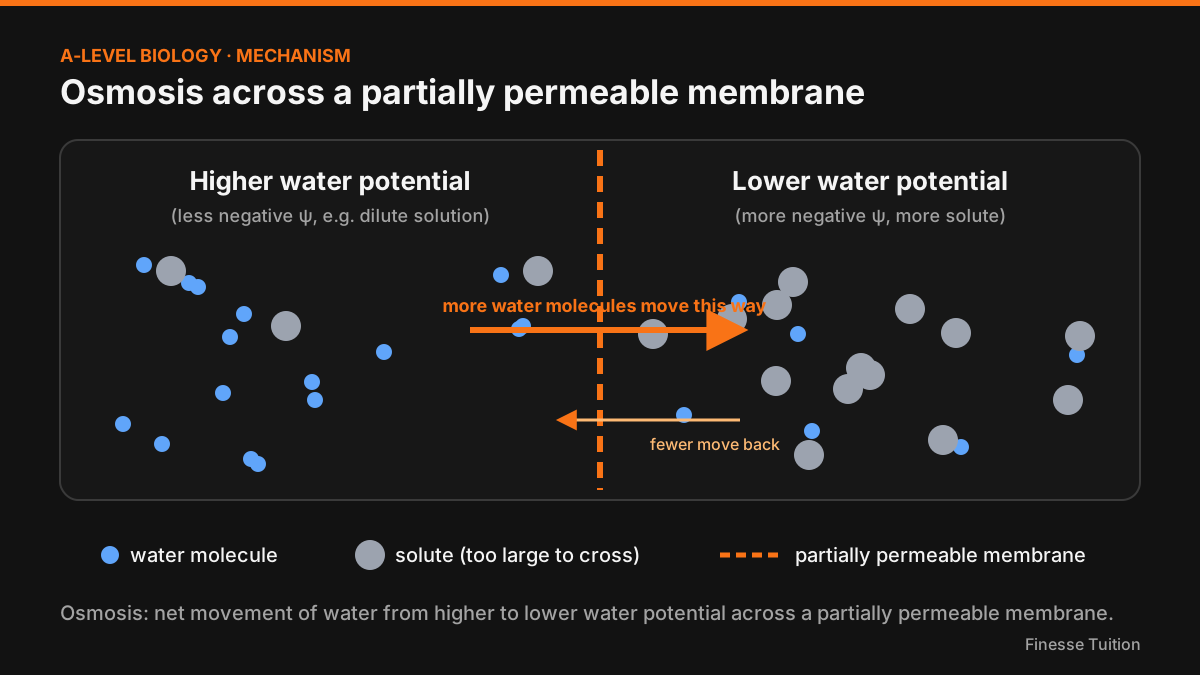
Osmosis is the net movement of water molecules from a region of higher water potential to a region of lower water potential across a partially permeable membrane. Each part of that sentence carries meaning, so try writing it from memory before reading on.
Water potential (ψ) is measured in kilopascals. Pure water at standard conditions has a water potential of 0 kPa. Dissolving solutes lowers the water potential, making it negative, so a more concentrated solution has a lower (more negative) water potential than a dilute one.
“Net” matters because water molecules move randomly in both directions across the membrane. More of them cross from the higher water potential side than move back, so the overall movement is in that direction. “Partially permeable” matters because the membrane lets water through but restricts larger solute molecules such as sucrose.
A common weak answer says that water moves “from a high concentration to a low concentration”. That is ambiguous, because it is not clear whether it means the concentration of water or of solute, and A-Level questions on this topic are framed in terms of water potential. Write the explanation using water potential, and say which side has the higher value.
Two other errors are worth checking for in your own sketches. Osmosis is a passive process: it does not need energy from respiration, so an arrow labelled “ATP” or “active transport” is wrong. And the solute does not “pull” water; the net movement is a consequence of the difference in water potential on each side of the membrane. When you explain plant cells, also be ready to use the terms turgid and plasmolysed, and to say that animal cells such as red blood cells, which lack a cell wall, can burst in a solution of much higher water potential.
Applying it: the potato cylinder investigation
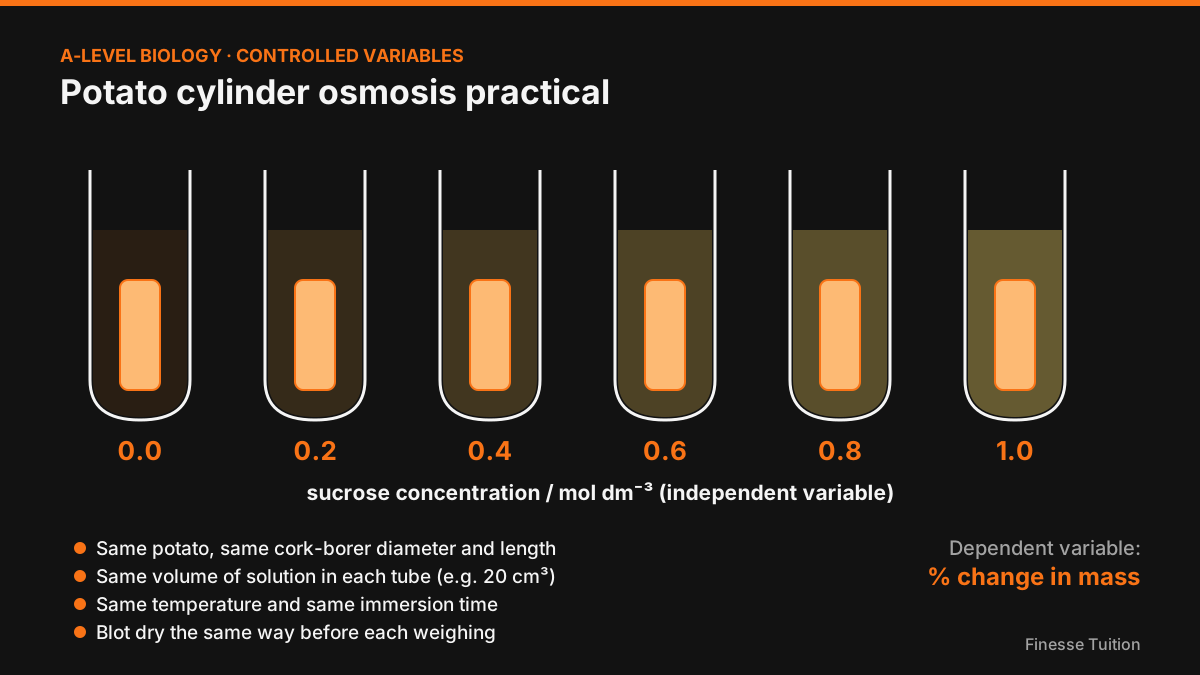
Practical contexts are an excellent test of whether you understand the mechanism. A typical investigation places potato cylinders of the same size, cut from the same potato, into sucrose solutions of different concentrations. Each tube contains the same volume of solution, all tubes are kept at the same temperature for the same time, and each cylinder is blotted in the same way before being weighed.
The independent variable is the sucrose concentration. The dependent variable is the percentage change in mass. Controlled variables include cylinder dimensions, the source of the tissue, solution volume, temperature, immersion time and the blotting method. Be ready to explain why each matters: for example, a larger surface area would allow more water movement in the same time, so cylinder size must be kept the same.
A worked calculation: percentage change in mass
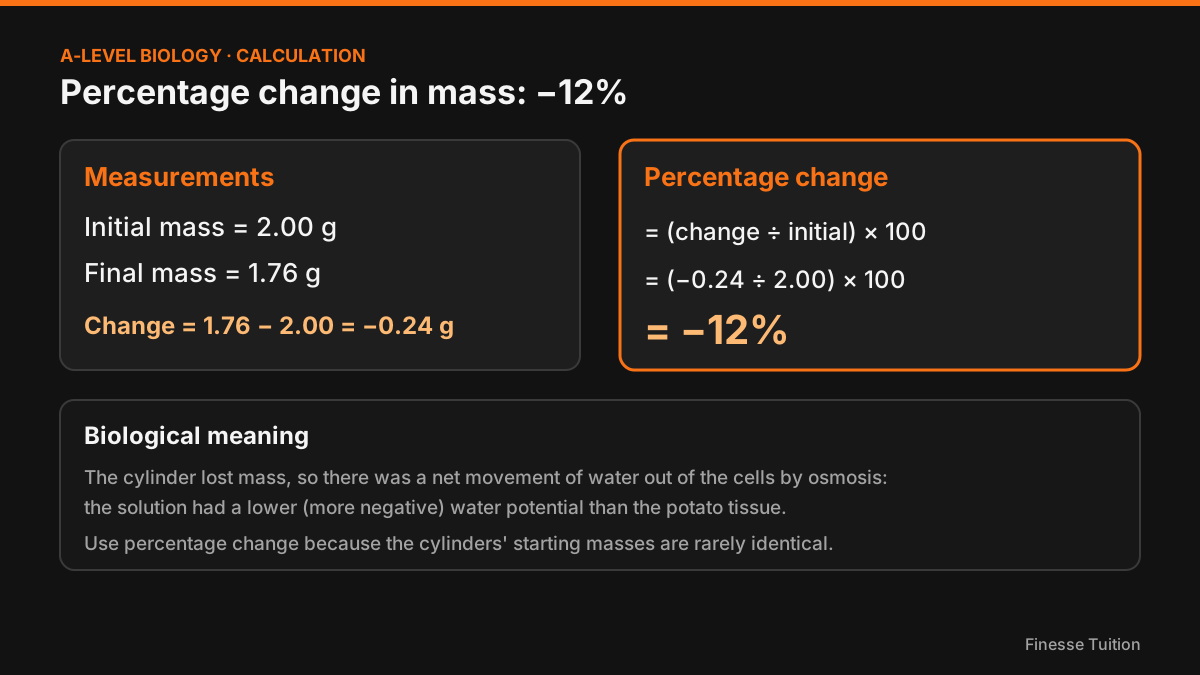
A cylinder has a mass of 2.00 g before immersion and 1.76 g afterwards. The change in mass is 1.76 − 2.00 = −0.24 g. The percentage change is (change ÷ initial mass) × 100 = (−0.24 ÷ 2.00) × 100 = −12%.
Now explain it, rather than stopping at the number. The cylinder lost mass, so there was a net movement of water out of the potato cells by osmosis. That means the surrounding solution had a lower water potential than the potato tissue. If another cylinder gained mass, the solution would have had a higher water potential than the tissue. Percentage change is used because cylinders rarely start at exactly the same mass, so absolute changes would not be directly comparable.
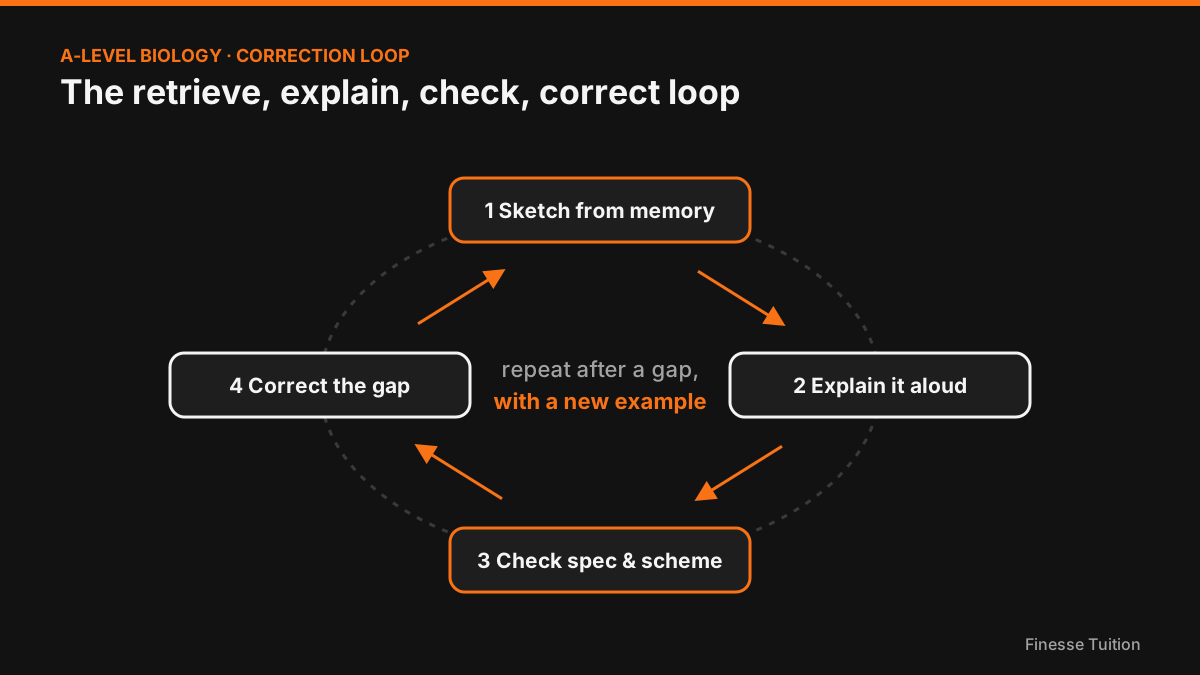
Retrieve, explain, check, correct
First, sketch the mechanism from memory on blank paper, with arrows showing direction. Second, explain it aloud or in writing, as if to someone who has not studied it. Third, check both against the AQA 7402 specification wording and against official mark schemes for questions on the topic, noticing exactly what you missed. Fourth, correct the sketch and the explanation in a different colour, so the gaps stand out.
Then change the example. After potato cylinders, try red blood cells placed in pure water, or plant cells in a concentrated salt solution. Use unfamiliar contexts so that you are applying the mechanism rather than recalling one answer. The Education Endowment Foundation’s guidance on metacognition (2025) describes this kind of planning, monitoring and evaluating of your own understanding as a valuable part of learning.
Limits of the evidence, and 2026 context
The research we cite supports retrieval and spacing as general principles. It did not test osmosis diagrams or measure A-Level Biology grades. Retrieval also works best once you have learned the material correctly at least once; drawing a mechanism from memory before you understand it will mostly reveal that you do not know it yet, which is still useful information.
On 13 August 2026 Ofqual reported that, after maths, the most commonly taken A-Level subjects were psychology and biology, as in 2025. Biology therefore remains one of the largest entries nationally, and the specification expects you to explain processes precisely, not just name structures.
A 20-minute spaced retrieval session
Use this on a mechanism you have already been taught. Repeat it two or three days later with a new example, then again about a week later.
- Minutes 0–5: on blank paper, sketch the mechanism from memory with labelled arrows.
- Minutes 5–9: write a three- or four-sentence explanation using precise terms such as water potential.
- Minutes 9–14: check against the specification and an official mark scheme; correct gaps in a different colour.
- Minutes 14–20: answer one unfamiliar application question, including any calculation, and explain the result.
Sources & further reading
- Dunlosky et al. (2013), Improving Students’ Learning With Effective Learning Techniques, Psychological Science in the Public Interest
- Karpicke & Roediger (2008), The critical importance of retrieval for learning, Science
- AQA A-Level Biology (7402) specification: subject content
- Education Endowment Foundation (2025), Metacognition and Self-Regulated Learning — guidance report, 2nd edition
- Ofqual blog, 13 August 2026: A level and level 3 results 2026 at a glance
- GOV.UK (Ofqual), Qualification results in England: summer 2026
Sources checked on 12 October 2026. Check linked guidance for subsequent changes.