
Chemistry
Stop memorising organic arrows. Start following the electrons.
Curly arrows are electron bookkeeping, not decoration. Learn AQA/OCR-A halogenoalkane substitution and elimination by accounting for the origin and destination of every electron pair.
By Finesse Tuition · · 8 min read
A familiar diagram can hide a misunderstanding
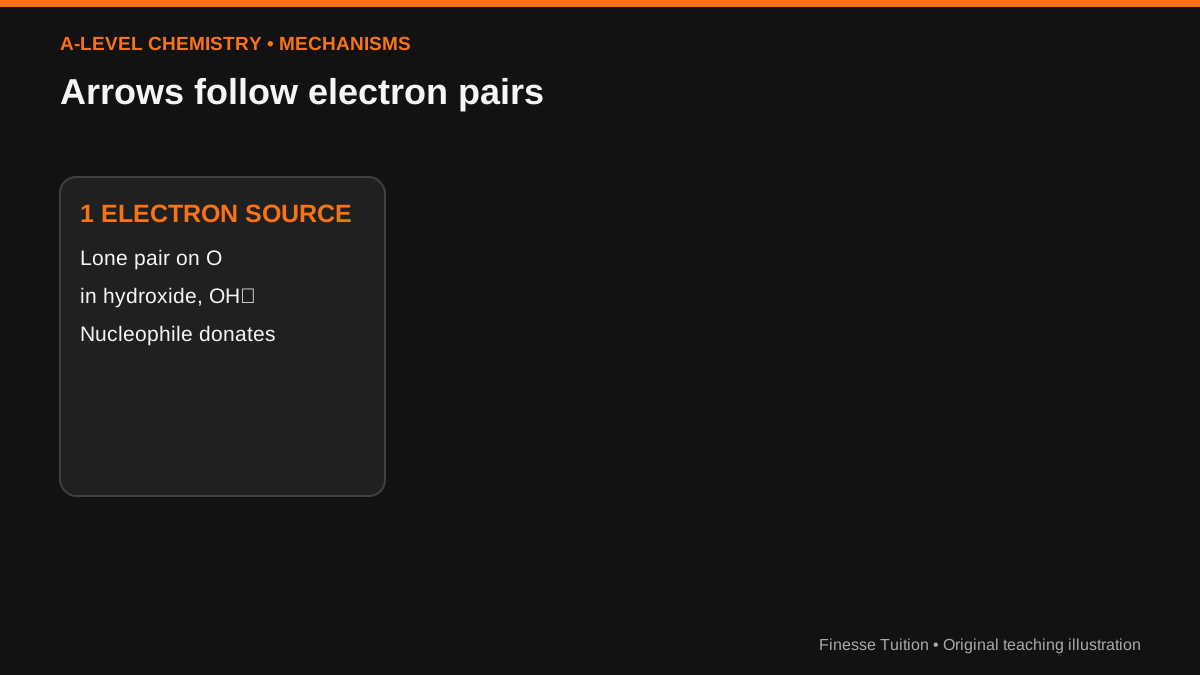
You may have copied the nucleophilic substitution mechanism ten times and still be unable to draw it on a new molecule. The reason is simple: copying the shape of an arrow is not the same thing as understanding which electrons move and why. A curly arrow is not a decorative instruction that says 'turn this into that'. It represents the movement of an electron pair.
That one idea is the backbone of this guide. We will start with bromoethane reacting with hydroxide, track the electrons through a complete mechanism and then ask what changes when hydroxide acts as a base rather than a nucleophile. These ideas are required in the AQA A-Level Chemistry (7405) halogenoalkane section and overlap with OCR Chemistry A haloalkane content. Check the exact language and assessed mechanisms for your board; not every advanced mechanistic distinction is required at A-Level.
The aim is not to replace chemical understanding with memorised mark-scheme phrases. It is to use understanding to write and draw exactly what the assessment question asks. A correct product with arrows drawn from the wrong place is an incomplete explanation of the chemistry.
Before every arrow, answer three questions
First: where are the electrons? A nucleophile such as hydroxide has a lone pair on oxygen, and a bond contains a shared pair of electrons. Second: what will those electrons approach? In bromoethane the carbon attached to bromine is relatively electron-poor because the C–Br bond is polar, so carbon has a partial positive charge. Third: what bond forms or breaks if the pair moves?
For electron-pair mechanisms use full-headed curly arrows. The arrow starts at the donating lone pair or at a bond and finishes at the atom or bond location receiving the pair. A minus-charge symbol is not itself an electron pair. A single-headed 'fishhook' arrow represents movement of a single electron in a radical mechanism and should not be used in this nucleophilic substitution.
Work backwards from the product as a check, but do not draw your mechanism simply to match the product. Identify the electrophilic centre, the electron source and the leaving bond; then ask whether atoms and overall electrical charge are accounted for.
Worked example: hydroxide replaces bromide
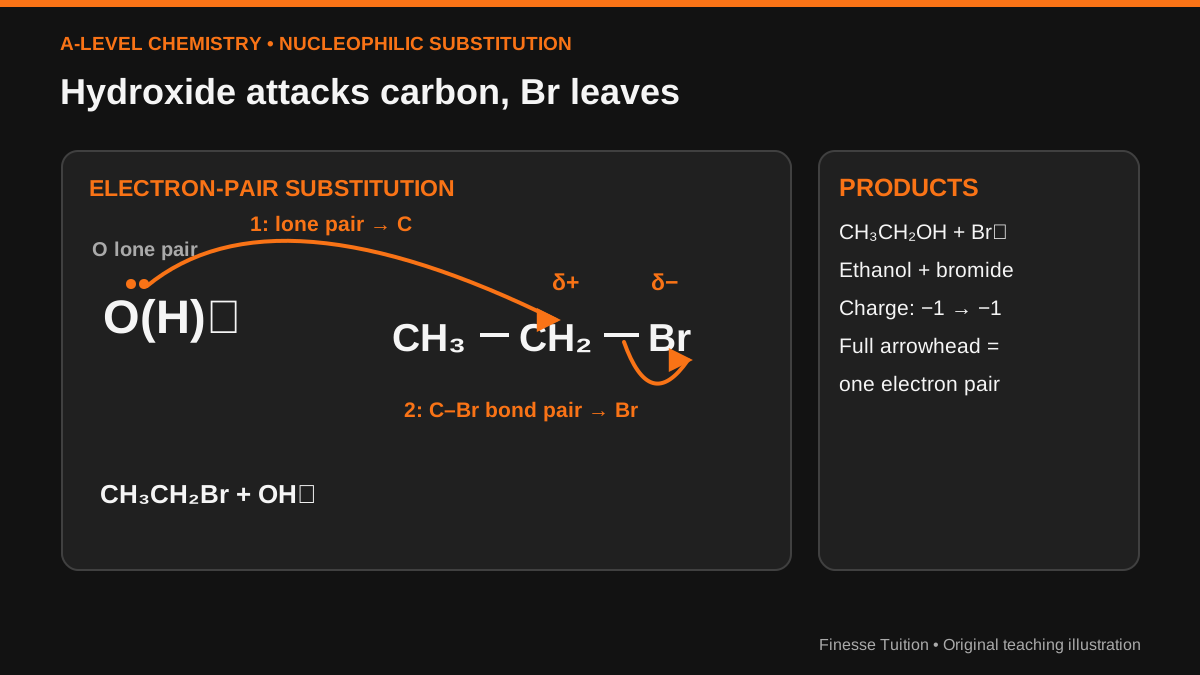
Write the overall ionic equation first: CH₃CH₂Br + OH⁻ → CH₃CH₂OH + Br⁻. The left-hand charge is −1 and the right-hand charge is also −1. The carbon skeleton remains two carbons long and the alcohol product is ethanol. These are valuable quick checks before looking at the detailed mechanism.
Next label the C–Br bond Cδ⁺–Brδ⁻. The oxygen atom of OH⁻ supplies a lone pair. Arrow one begins at that O lone pair and ends at the electrophilic carbon bonded to Br; it shows formation of the C–O bond. Arrow two begins at the C–Br bond and ends on the Br atom; it shows heterolytic cleavage so bromide leaves with the bonding pair. The arrows therefore account for both the new bond and the old bond.
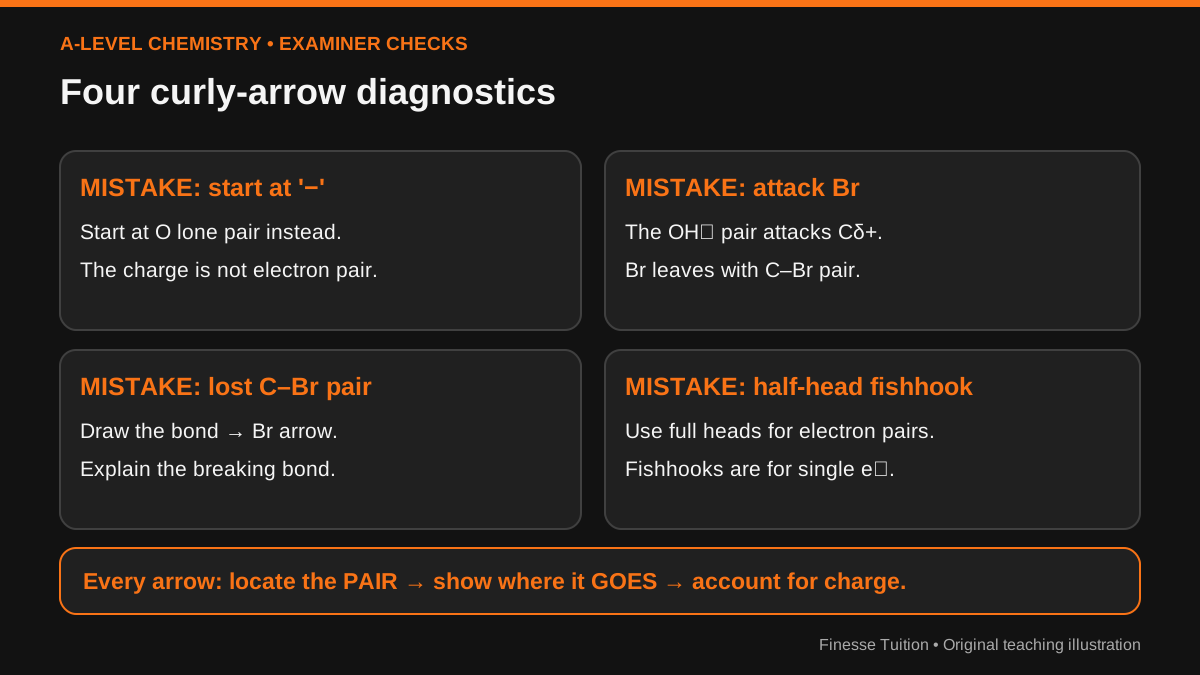
Do not begin the first arrow at the '−' sign, point it at Br or say that the electrons are moving from the carbon towards hydroxide. A reaction scheme with the right final molecules but incorrect arrow origins does not show the mechanism correctly. Aqueous hydroxide under suitable warm conditions is used for hydrolysis of halogenoalkanes; the precise conditions should be learned with the board's specified example.
Transfer test: cyanide adds a carbon
Now change the nucleophile. Cyanide ion, CN⁻, can attack via its carbon end to create a new carbon–carbon bond. The overall simplified reaction is CH₃CH₂Br + CN⁻ → CH₃CH₂CN + Br⁻. Bromoethane has two carbons; propanenitrile has three. This is useful in multi-step organic synthesis because it extends the carbon chain by one atom.
Do not count the nitrogen of the nitrile group as a carbon or assume that cyanide attaches through nitrogen in the intended A-Level substitution product. Ask yourself where the electron-donating end of the nucleophile is and which bond must break. Then check charge balance and the IUPAC name.
AQA explicitly includes OH⁻, CN⁻ and NH₃ as nucleophiles. Be careful with ammonia: initial attack creates a protonated amine species, followed by transfer/removal of a proton in an overall route to the amine. Do not draw an unexplained one-step arrow straight to a neutral amine if the task asks you for the full mechanism.
The same OH⁻ can be a nucleophile or a base
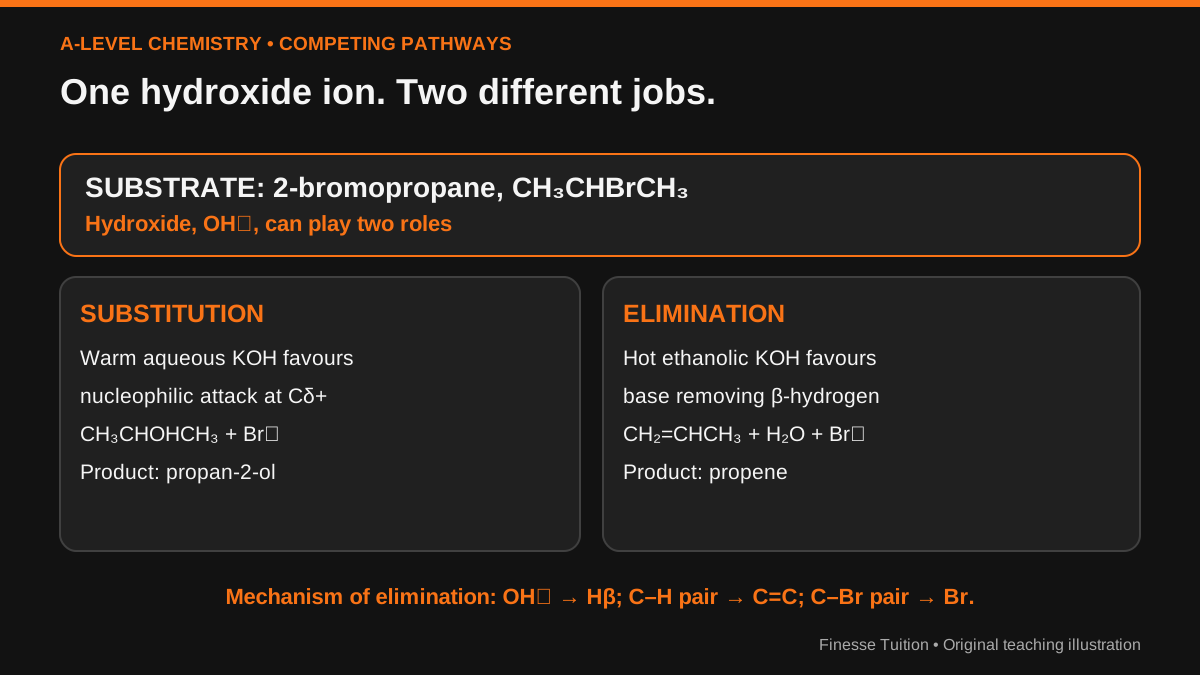
Take 2-bromopropane. With warm aqueous potassium hydroxide, nucleophilic substitution is favoured and an alcohol, propan-2-ol, can form: CH₃CHBrCH₃ + OH⁻ → CH₃CHOHCH₃ + Br⁻. The hydroxide electron pair attacks the electrophilic carbon and Br leaves.
With hotter ethanolic hydroxide, elimination is favoured instead. The overall ionic equation is CH₃CHBrCH₃ + OH⁻ → CH₂=CHCH₃ + H₂O + Br⁻. Here OH⁻ behaves as a base: its lone pair forms a bond with a hydrogen on a carbon adjacent to the carbon bearing Br. Electrons from that C–H bond form the C=C double bond, while the C–Br bond electrons leave with bromide. In a full electron-pair mechanism, that means THREE arrows, each with a defined source.
Conditions influence which pathway predominates; they do not switch one pathway off by magic. Substrate structure also matters. The AQA specification explicitly discusses concurrent substitution and elimination of a halogenoalkane, so do not write that hydroxide can ONLY be a nucleophile or ONLY a base.
Spot the mistakes before a marker does
If an arrow starts at an atom with no identified donating electron pair, stop. If it ends on the leaving halogen when it is supposed to show nucleophilic attack, stop. If the C–Br bond disappears without an arrow accounting for its electrons, stop. Every arrow must have a beginning, a destination and an accompanying bond change.
An arrow from the C–Br bond to Br is not 'bromine attacking'. It illustrates electrons returning to bromine as the bond breaks. Conversely, the first substitution arrow should end at the electron-poor carbon, because that is where the incoming electron pair forms a bond. In elimination, the carbon adjacent to the C–Br carbon must bear a hydrogen that the base can remove; no suitable beta hydrogen means that particular elimination cannot occur.
Pay attention to the command word. 'Give the product' is different from 'outline the mechanism'. The first asks for the outcome; the second tests polarity, electron sources and arrow placement. Do not use a learned picture in place of reading which substrate and reagent are in the question.
Three unfamiliar questions that reveal real understanding
Question A: hydroxide reacts with 1-bromopropane. Identify the carbon that carries Br and draw substitution to propan-1-ol. Your first arrow must go from the oxygen lone pair to the carbon bearing Br, even though the chain is now three carbons long.
Question B: bromoethane reacts with CN⁻ under appropriate conditions. Draw the two electron-pair arrows and name the nitrile. The carbon count is the crucial self-check. Question C: a question gives 2-bromopropane with hot ethanolic KOH and asks for the major organic outcome. Draw propene, then explain why the hydroxide acts as a base rather than merely writing 'because heat'.
Only reveal the official solution after a serious unaided attempt. Compare your diagram with your board's mark scheme, including any alternative accepted drawing conventions. A particular examiner's note may relate to that question only; do not inflate it into a universal chemistry law.
Explain from memory, then get feedback
An effective drill combines a correct initial model with retrieval and explanation. Chi and colleagues' 1994 study found benefits of prompted self-explanation for understanding a biological text among a small group of younger pupils; it did not test organic mechanisms. Dunlosky and colleagues' review rates practice testing and spacing highly as general learning techniques, but that does not prove a fixed effect size for an A-Level Chemistry mechanism.
The Education Endowment Foundation's 2021 guidance on feedback emphasises helping learners act on information about their current performance. Translate that principle into a precise repair: if you drew the C–Br cleavage arrow in the wrong direction, redraw the entire mechanism on blank paper and explain where the bonding pair goes. Then try the same electron-accounting decision with a new halogenoalkane.
Do not make drawings so complicated that they conceal the answer. The aim is the required mechanistic chemistry, not decorative art, and you must still learn the relevant products, conditions and other synthesis reactions.
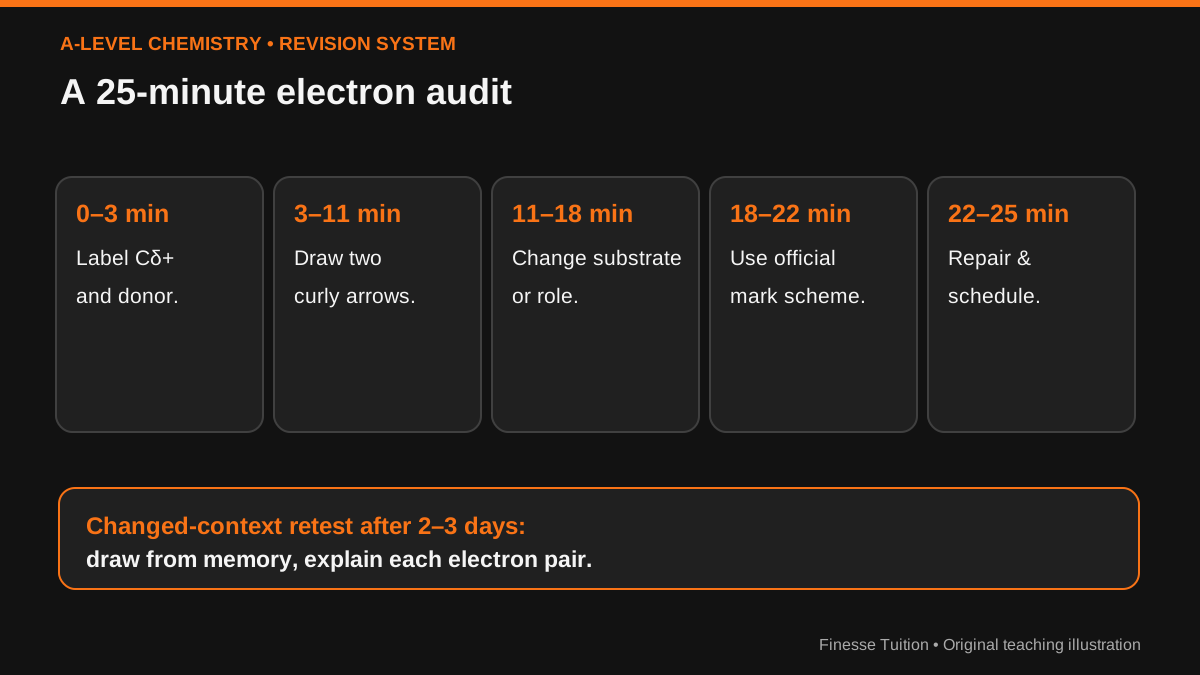
A 25-minute electron-accounting routine
This is an example routine for a topic you have already encountered in teaching. Adjust the balance between explanation and questions to the marks you are actually losing. Finish with a scheduled retest on a new substrate after a couple of days, not just a promise to 'do more organic'.
- 0–3 min: classify the reagent as electron-pair donor, base or both; mark Cδ⁺.
- 3–11 min: draw substitution from blank paper and verbalise both arrow sources.
- 11–18 min: change to a different substrate or to CN⁻; then compare elimination conditions.
- 18–22 min: mark against a board question and repair any misplaced arrows.
- 22–25 min: write a changed-context recall prompt and schedule a retest in two or three days.
What this technique cannot promise
Electron bookkeeping is a reliable chemical way to understand the mechanisms named in your specification, but an A-Level drawing is a deliberately simplified representation of a more detailed physical process. Do not infer that every halogenoalkane reacts at the same rate or by an identical detailed pathway in all solvents. Follow the level of mechanistic detail your current board requires.
Retrieval, self-explanation and feedback are supported by general educational research; none of the sources cited demonstrates that this one drill guarantees an A or A*. Use the method to locate misconceptions and check progress on unfamiliar exam questions.
Sources & further reading
- AQA A-Level Chemistry 7405: organic chemistry, sections 3.3.3.1–2
- OCR Chemistry A H032: haloalkane content 4.2.2, official specification PDF
- Chi et al. (1994), Eliciting Self-Explanations Improves Understanding
- Dunlosky et al. (2013), review of study techniques
- EEF (2021), Teacher Feedback to Improve Pupil Learning guidance
Sources checked on 12 October 2026. Check linked guidance for subsequent changes.